Lorem ipsum dolor sit amet, consectetur adipiscing elit ut liqua purus sit amet luctus venenatis, lectus magna.


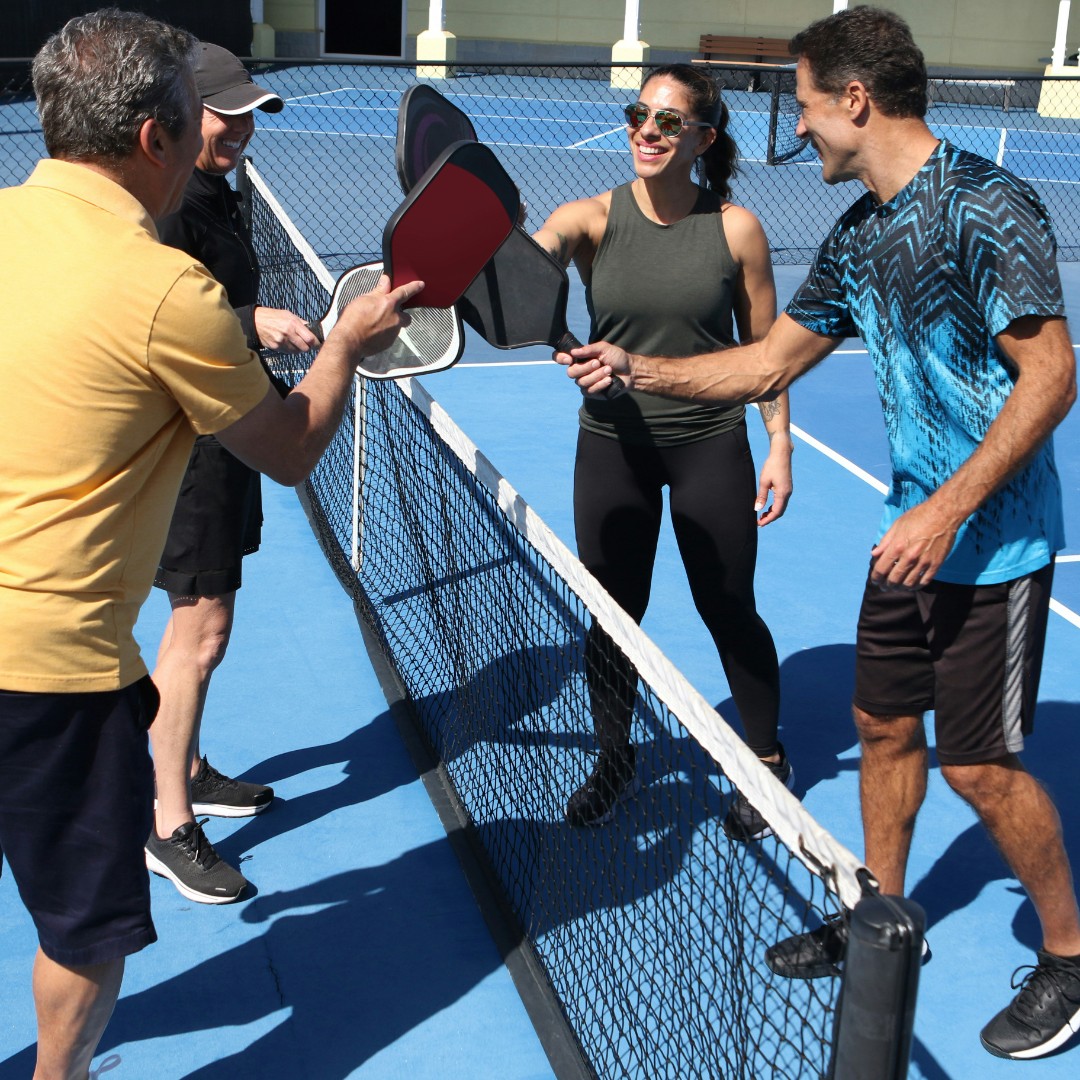
If you have walked past a public park recently, you have probably noticed the sharp pop-pop sound of pickleball paddles. The sport has exploded in popularity, yet many first-time spectators immediately compare it to tennis.
While they appear similar at first glance, pickleball and tennis have distinct rules, equipment, and strategies that shape very different playing experiences. Here is a clear look at how the two sports diverge.
The most obvious difference is court size. A standard pickleball court measures 20 feet wide by 44 feet long, the same footprint as a badminton doubles court. In tennis, a singles court is 27 by 78 feet and widens to 36 feet for doubles.
The smaller pickleball court means less ground to cover, encouraging quick reflexes over long-distance sprints. It also features a seven-foot no-volley zone, known as "the kitchen," that prevents players from smashing volleys at the net. Tennis has no comparable restricted area.
Pickleball players swing solid paddles made of composite or graphite materials, roughly the size of an oversized table-tennis paddle. Tennis relies on strung racquets that flex and add power through string tension.
The ball adds another layer of contrast. Pickleball uses a lightweight plastic ball with holes, similar to a whiffle ball. It produces less bounce and slower speeds than the pressurized felt-covered tennis ball.
In pickleball, only the serving team can earn points. Games are played to 11 (win by two) in casual settings and sometimes to 15 or 21 in tournaments. A team’s score is announced first, followed by the opponent’s score, then the server number.
Tennis employs a unique point sequence of 15-30-40-game, with deuce and advantage situations adding complexity. Players can score on either serve or return, and matches extend through sets that may require tiebreakers.
A pickleball serve is made underhand, contacting the ball below waist level, and must land diagonally past the kitchen line. Servers get one attempt per rotation, though a let that clips the net and lands in the correct box is replayed.
In tennis, servers strike overhead anywhere behind the baseline and receive two chances per point. A serve that grazes the net but lands in bounds is also replayed, called a let, yet double faults immediately concede the point.
Because of the smaller court and slower ball, pickleball rallies often revolve around finesse shots, dinks, and patient positioning near the kitchen. Explosive drives still exist, but soft play and anticipation often win the day.
Tennis points can stretch the full length of the court, blending baseline power with net rushes. The faster ball speed and larger space demand more lateral movement and endurance.
One reason pickleball has grown so quickly is its gentle learning curve. New players can sustain rallies within minutes, and the smaller court means less running, making it appealing to a wide age range.
Tennis rewards players with strong footwork, topspin control, and strategic serve placement, skills that often require longer practice before competitive rallies feel natural.
Pickleball and tennis share a family resemblance but differ in dimensions, gear, scoring, and overall tempo. These contrasts shape distinct cultures around each sport and allow players to choose the experience that best fits their preferences and fitness goals.
Whether you enjoy the compact tactical exchanges of pickleball or the expansive power exchanges of tennis, both sports offer rewarding ways to stay active and social on the court.
Gametime Hero is the AI-powered operating system for active communities.
If you're organizing a community and tired of the chaos, start here
You know your community best — we know how to help it thrive.
You're already doing the hard part: building a community people care about. Gametime Hero gives you events, registration forms, a custom website, payments, scheduling, and communications — so you can stop juggling tools and start scaling.
Whether you run a weekly pickup group or a multi-season league, we'll walk you through exactly how it works for your setup.


Explore our collection of 200+ Premium Webflow Templates