
How to Play Racquetball: Rules & Game Overview
Racquetball is played on an enclosed 20 by 40 foot court where walls, ceiling and floor are all in play. You win rallies by hitting the ball so your opponent cannot return it before a second bounce. Only the server scores, and matches are best of three, with games to 15 and a tiebreaker to 11.
Fast, loud, and surprisingly strategic, racquetball delivers a full-body workout in a compact indoor space. Whether you are eyeing a local league or just want something new at the gym, understanding the basic rules is the quickest path to an enjoyable first match.
This guide walks through the court layout, required gear, scoring system, serving rules, common fouls, and key tips so you can step onto the court prepared and confident.
Court Layout and Equipment
Racquetball is played on a fully enclosed court measuring 20 feet wide, 40 feet long, and 20 feet high. The walls, ceiling, and floor are all in play, which is what creates the game’s trademark speed.
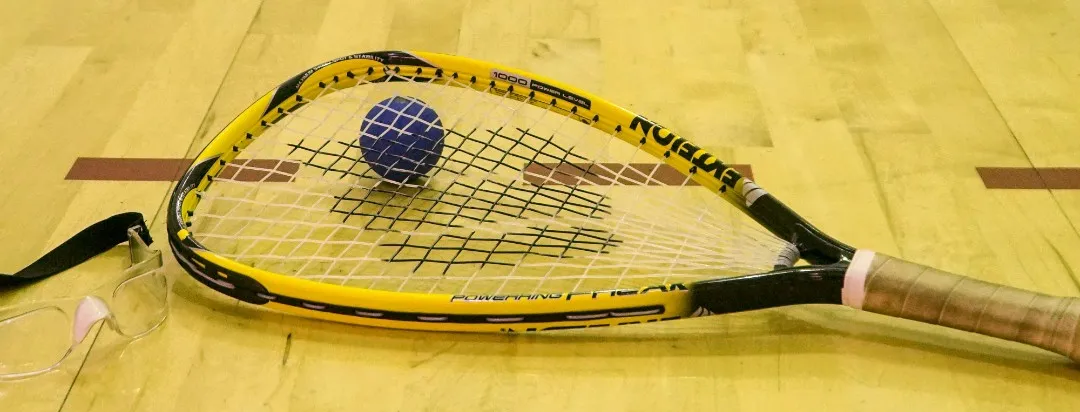
You only need a few pieces of gear to get started: a strung racquetball racquet, an official hollow rubber ball, court shoes with non-marking soles, and protective eyewear. Most indoor fitness centers provide balls and may have rental racquets, but owning a well-fitted pair of goggles is strongly recommended.
- Racquet length: 22 inches or less
- Standard ball color: blue for casual play, green or purple for tournaments
Objective of the Game
The aim is straightforward: win rallies by hitting the ball so your opponent cannot return it before it bounces twice on the floor. Because the walls and ceiling are in play, creative angles and quick footwork are essential.
Matches are typically played best two out of three games. The first two games go to 15 points, while an optional third tiebreaker is played to 11.
Basic Scoring System
Only the server can score. If the server wins a rally, they earn one point and continue serving. If the receiver wins, no point is awarded; instead, the serve changes hands in what’s called a side-out.
There is no win-by-two requirement. Reaching the target score first is enough to claim the game.
Serving Rules and Faults
Every rally begins with a serve made from within the service zone, the area between the short line and the service line. The server must bounce the ball once on the floor, then strike it so it hits the front wall first and lands past the short line.
Common faults include short serves that bounce before the short line, long serves that hit the back wall on the fly, and three-wall serves where the ball contacts both side walls before the floor. Two consecutive faults result in a side-out.
- Screen serve: legal if unintentional, replay if it blocks the receiver’s view
- Foot fault: stepping outside the service zone before contact
Return of Serve and Rally Play
Once the serve is legal, the receiver may strike the ball after it passes the short line or off a single bounce. The ball can hit any combination of walls and the ceiling during the rally, as long as it reaches the front wall before touching the floor.
Players alternate shots until one fails to return the ball legally. Quick reactions and shot variety such as passing shots, pinches, and ceiling balls keep rallies unpredictable.
Common Hinders and Penalties
Because both players occupy the same space, unintentional interference happens. A hinder is called when a player blocks the opponent’s direct shot to the front wall. In most cases, the rally is replayed.
Avoidable hinders, such as deliberate blocking or striking the opponent with the ball when another clear shot existed, award the rally to the obstructed player. Understanding positioning etiquette prevents these disputes.
Beginner Strategy Tips
Control center court whenever possible. From this location you can reach most shots with minimal movement, while forcing your opponent to cover more ground.
Mix heights and angles. Driving the ball low for speed, then lofting a high ceiling ball can keep an opponent off balance and buy you time to reset your position.
Final Thoughts
Racquetball rewards fitness, focus, and creativity, yet the core rules remain simple enough to learn in an afternoon. By mastering the serve, understanding the scoring system, and respecting court etiquette, newcomers can enjoy competitive rallies right away.
Grab a racquet, secure your goggles, and try these fundamentals during your next visit to the gym. The more you play, the quicker the walls start working in your favor.
Gametime Hero is the AI-powered operating system for active communities.
If you're organizing a community and tired of the chaos, start here

