Lorem ipsum dolor sit amet, consectetur adipiscing elit ut liqua purus sit amet luctus venenatis, lectus magna.

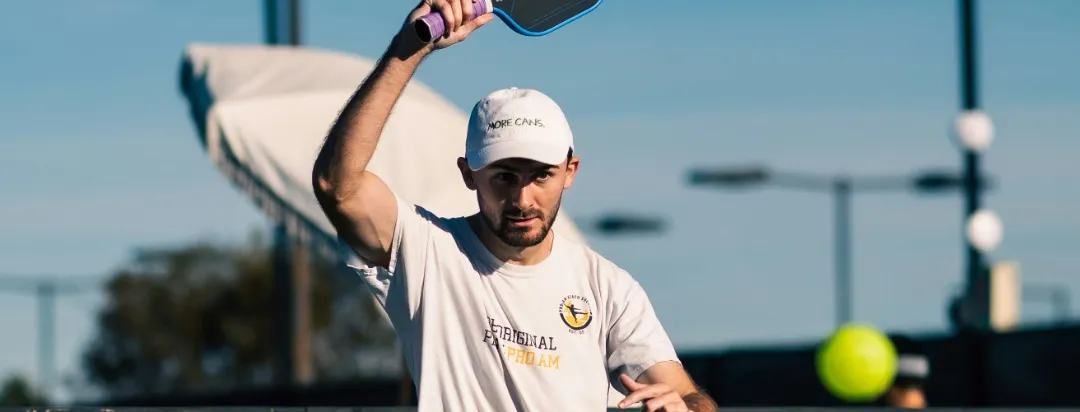
A pickleball rally can last only a blink or stretch into an exhausting exchange, but in every case a specific event brings it to a close. Knowing precisely what ends a rally is essential whether you are keeping score in a friendly match or competing in a sanctioned tournament.
This guide breaks down the most common rally-ending situations, faults, kitchen violations, serving mistakes, and scoring formats, so you can avoid unnecessary turnovers and keep the ball in play longer.
A rally is the continuous sequence of shots between the serve and the moment a fault occurs. It begins when the server contacts the ball and ends the instant a rule is violated or the ball is declared dead by the referee.
Because serving teams traditionally could not score under side-out rules, extending rallies has always been a critical skill. The newer rally scoring format rewards every rally with a point, making each mistake even more costly.
A fault is any rules infraction that causes the rally to end immediately. While the full rulebook is extensive, a handful of violations account for the vast majority of stoppages.
Recognizing these scenarios quickly helps players avoid avoidable turnovers and keeps matches flowing smoothly.
The non-volley zone, more commonly called the kitchen, creates one of the sport’s signature constraints. Players may enter the kitchen at any time, but they cannot volley, the act of striking the ball in the air, while any part of their body is touching the zone or its boundary lines.
A volley taken with a toe on the line, a swinging follow-through that carries a player forward, or even a hat falling into the kitchen is scored as an immediate fault, ending the rally. Awareness of foot position and balance is therefore crucial during fast net exchanges.
A legal serve must be made underhand, contact the ball below waist level, and land diagonally in the opponent’s service court beyond the kitchen line. If any of these criteria are not met, the serve is a fault and the rally ends before the return.
Foot faults are another common culprit. The server’s feet must stay behind the baseline until the ball is struck. Stepping on or over the line results in an immediate loss of serve and, under rally scoring, awards a point to the opposition.
Traditional side-out scoring allows only the serving team to score a point. When the receivers win a rally, they gain the serve but no point is awarded. This format rewards consistency from the serving side and can lead to long scoreless stretches.
Rally scoring, popular in recreational settings and some tournaments, assigns a point to the winner of every rally regardless of who served. As a result, every mistake, from a kitchen violation to a mishit return, immediately changes the score, increasing the pressure on each shot.
Solid fundamentals are the best insurance against accidental faults. Practice deep serves and returns to buy extra reaction time, and keep your weight balanced so momentum does not drag you into the kitchen.
Communication in doubles play is equally important. Calling out bounce decisions and potential out balls prevents confusion and reduces the risk of mishits that would otherwise stop the rally.
Understanding exactly what ends a rally in pickleball, whether it is a basic fault, a kitchen error, a serving miscue, or the nuances of rally scoring, equips players to stay focused and minimize unforced turnovers.
Master these details, and you will extend points, build momentum, and ultimately put more games in the win column.
Gametime Hero is the AI-powered operating system for active communities.
If you're organizing a community and tired of the chaos, start here
You know your community best — we know how to help it thrive.
You're already doing the hard part: building a community people care about. Gametime Hero gives you events, registration forms, a custom website, payments, scheduling, and communications — so you can stop juggling tools and start scaling.
Whether you run a weekly pickup group or a multi-season league, we'll walk you through exactly how it works for your setup.


Explore our collection of 200+ Premium Webflow Templates