
What Is Footgolf? A Complete Beginner’s Guide
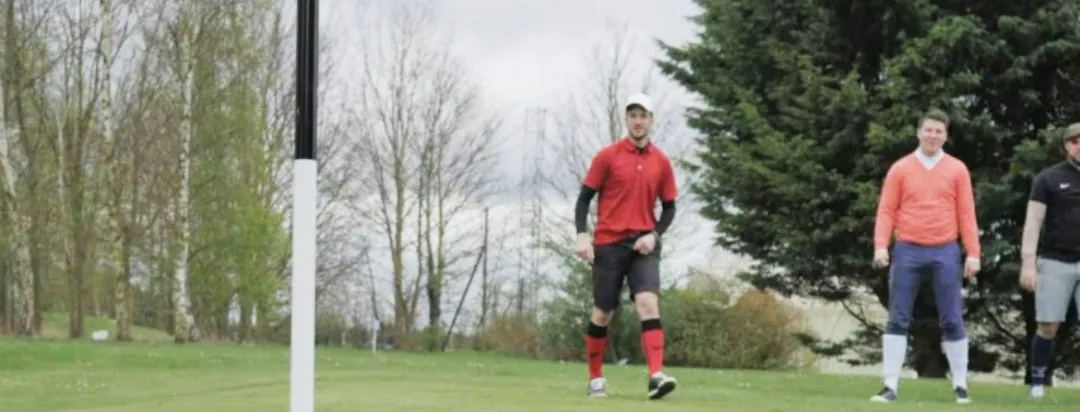
Footgolf combines golf and soccer: players kick a size 5 soccer ball around a golf course, trying to sink it in a 21-inch cup in as few kicks as possible. Rounds are 9 or 18 holes, scored against par like golf.
Imagine stepping onto a manicured fairway, but instead of swinging a club you place a soccer ball at your feet. One well-aimed kick later, the ball sails toward an oversized cup on the green. That is Footgolf in a nutshell.
This mash-up of two familiar sports has exploded in popularity over the last decade, attracting casual players, families, and elite athletes alike. Before you lace up your cleats, here is everything you need to know about how Footgolf works.
How Footgolf Got Its Start
While informal variations existed earlier, modern Footgolf traces its roots to the Netherlands in the early 2000s. European soccer clubs used golf courses for team-building exercises that replaced clubs with footballs.
The concept quickly spread. By 2012, the Federation for International FootGolf (FIFG) formed to standardize rules and promote global tournaments. Today, more than 40 countries host sanctioned events, and many traditional golf courses offer dedicated Footgolf tee times.
Core Rules and Objective
Footgolf follows the same basic principle as traditional golf: complete each hole with the fewest strokes, or in this case kicks. A standard round consists of 9 or 18 holes, each with a par rating that guides scoring expectations.
Players start from a designated tee box, kick the ball toward the fairway, navigate bunkers or water hazards, then finish by sinking the ball into a 21-inch diameter cup. Out-of-bounds penalties, order of play, and etiquette closely mirror golf.
Course Layout and Essential Gear
Most Footgolf courses are laid out on existing golf facilities, though the holes are shorter to accommodate a rolling soccer ball rather than an airborne golf ball. Distances range from 50 to 250 yards, and obstacles are adjusted so play stays safe for both golfers and footgolfers.
The sport is refreshingly low-maintenance when it comes to equipment, no expensive bag of clubs required.
- Size 5 soccer ball (standard match ball)
- Turf or indoor soccer shoes, metal spikes are not allowed
- Comfortable athletic attire, often styled after traditional golf clothing
Scoring, Strategy, and Etiquette
Scoring works exactly like golf: record the number of kicks per hole and compare it to par. Birdies, bogeys, and eagles all apply, giving seasoned golfers a familiar vocabulary.
Strategy centers on reading slopes, judging ball roll, and mastering controlled power. Because you cannot use a club to chip or pitch, learning delicate toe or instep touches becomes essential around the green. Quiet on the tee, playing ready golf, and repairing divots made by your ball are all part of expected etiquette.
Competitive Scene and World Tours
Footgolf is more than a casual weekend pastime. National associations run ranking systems and qualifiers that feed into the FIFG World Cup, held every two years. The event features individual and team formats and attracts hundreds of players.
Prize purses are still modest compared with mainstream sports, yet sponsorship deals and televised highlights are pushing Footgolf toward broader recognition. Many local leagues also operate handicap systems, allowing beginners to compete on a level playing field.
Why You Should Give Footgolf a Try
Accessibility is one of the sport’s biggest draws. Anyone who can kick a ball can participate, making Footgolf perfect for mixed-skill groups or family outings. Rounds are typically faster than golf, often finishing in under two hours.
Because the required gear is minimal and greens fees are lower, the cost barrier is small. Add in the cardio workout from walking the course and you have a fun, social, and healthy outdoor activity.
Final Thoughts
Footgolf takes the strategic challenge of golf and fuses it with the universal appeal of soccer, creating a fresh experience that is easy to learn yet tough to master.
Whether you are a golfer looking for a new twist or a soccer player after a different kind of pitch, Footgolf offers a compelling reason to head to the fairways with a ball under your arm instead of a bag of clubs.
Gametime Hero is the AI-powered operating system for active communities.
If you're organizing a community and tired of the chaos, start here

