Lorem ipsum dolor sit amet, consectetur adipiscing elit ut liqua purus sit amet luctus venenatis, lectus magna.

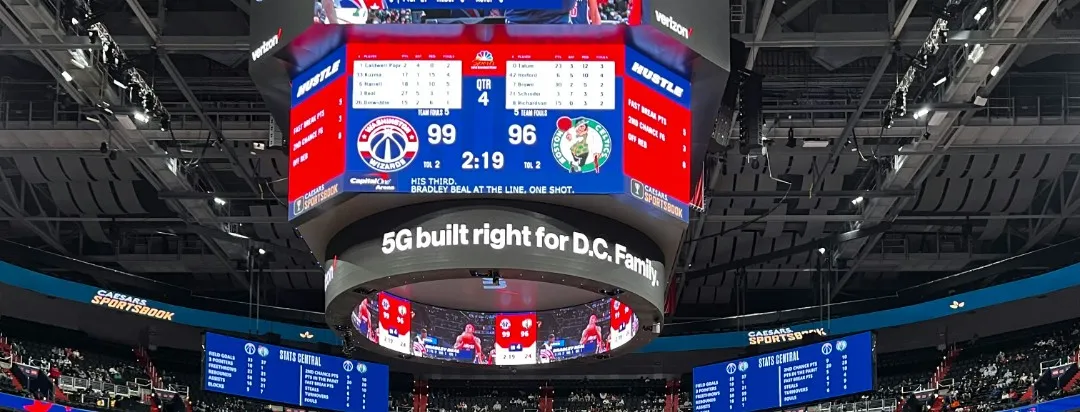
The WNBA postseason is short, intense, and often misunderstood by casual fans who may assume it mirrors the NBA. In reality, the league has crafted its own format to reward regular-season success while keeping every round competitive.
This guide walks through each stage of the current WNBA playoff structure, explaining how teams qualify, how each series is scheduled, and what has changed in recent years.
Eight of the league’s twelve teams advance to the postseason. Qualification is based solely on overall win-loss record, not conference standing, so it is possible for one conference to place more teams than the other.
When the regular season ends, clubs are ranked one through eight according to winning percentage. Any ties are broken using a league-defined set of criteria.
The bracket follows a traditional format: 1 vs 8, 2 vs 7, 3 vs 6, and 4 vs 5. After each round teams are not reseeded; the bracket stays fixed from the outset.
Higher seeds gain home-court advantage in every series, an incentive that can make late-season games matter even to already-qualified clubs.
Since 2022 the opening round is a best-of-three series. The higher seed hosts Games 1 and 2, while the lower seed gets Game 3 if necessary.
This 2-1 format reduces travel, grants a meaningful edge to top seeds, and eliminates the single-elimination stress that existed from 2016 to 2021.
Both the semifinals and WNBA Finals use a best-of-five, 2-2-1 setup. The team with the better record hosts Games 1, 2, and 5.
Longer series tend to balance out anomalies and allow coaching adjustments to play a bigger role in deciding who lifts the trophy.
Because the league spans only twelve teams, travel distances can be large. The 2-1 and 2-2-1 formats limit trips while still giving fans in both cities a chance to see their team live.
If an arena conflict arises, the league can adjust dates or swap venues, but such changes are rare.
When two or more teams finish with identical records, the following steps are applied until the tie is resolved.
From 1997 to 2015 the league used conference brackets. That system ended in 2016, shifting to a single league table and introducing single-elimination rounds.
The most recent overhaul in 2022 replaced those knock-out games with best-of-three series, aligning the opening round with the longer formats used later.
The current WNBA playoff format strikes a balance between maintaining competitive integrity and showcasing the league’s best teams on a national stage.
Understanding how seeding, series length, and tie-breakers work adds an extra layer of appreciation when the postseason tips off each fall.
Gametime Hero is the AI-powered operating system for active communities.
If you're organizing a community and tired of the chaos, start here
You know your community best — we know how to help it thrive.
You're already doing the hard part: building a community people care about. Gametime Hero gives you events, registration forms, a custom website, payments, scheduling, and communications — so you can stop juggling tools and start scaling.
Whether you run a weekly pickup group or a multi-season league, we'll walk you through exactly how it works for your setup.


Explore our collection of 200+ Premium Webflow Templates