Lorem ipsum dolor sit amet, consectetur adipiscing elit ut liqua purus sit amet luctus venenatis, lectus magna.

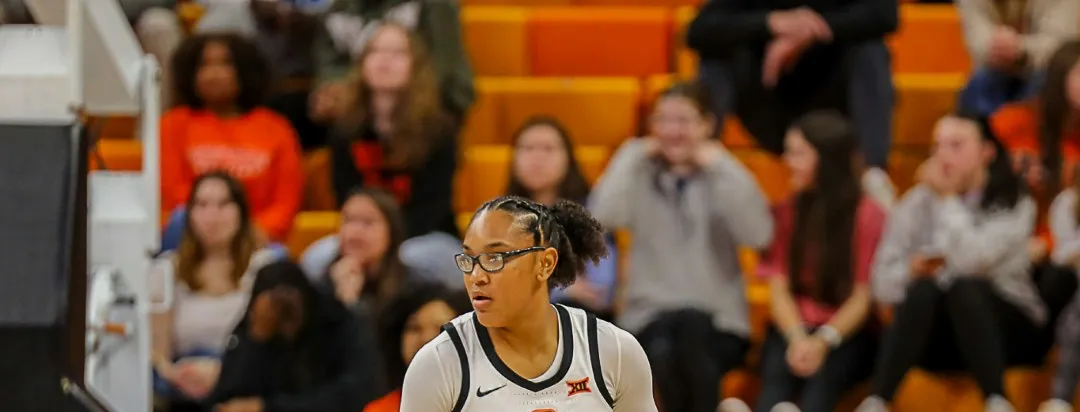
Basketball’s fundamental laws stay mostly the same whether you’re watching the WNBA or the NBA, yet each league tailors the rulebook to fit its style of play. Those tweaks, while subtle on paper, shape pacing, strategy, and even roster construction.
If you have ever flipped channels between a mid-July WNBA clash and a winter NBA matchup and sensed the rhythm felt different, the answer lies in the details. Below are the biggest rule differences that separate the two professional circuits.
An NBA regulation game features four 12-minute quarters, totaling 48 minutes. The WNBA trims each quarter to 10 minutes, producing a 40-minute contest that moves faster and compresses rotations.
Both leagues use a 24-second shot clock and reset to 14 seconds after an offensive rebound. Overtime periods are identical at five minutes, so any tempo difference is rooted mainly in the shorter regulation clock.
The WNBA deploys a slightly smaller ball: 28.5 inches in circumference and weighing about an ounce less than the NBA’s 29.5-inch model. That adjustment aids shooting touch and ball control for the women’s game.
The three-point arc also varies. In the NBA it peaks at 23 feet 9 inches (22 feet in the corners). The WNBA arc tops out at 22 feet 1.75 inches, giving shooters a marginally closer long-range look.
The NBA enforces a defensive three-second violation, preventing a defender from camping in the paint without actively guarding an opponent. It encourages spacing and opens driving lanes.
The WNBA does not use this rule. Teams can park a center near the rim as long as they wish, leading to more zone looks and a different approach to rim protection and pick-and-roll defense.
Timeout allotments differ. An NBA team starts with seven timeouts, while WNBA teams receive two full timeouts per half plus two 20-second timeouts, creating fewer stoppages overall.
Advancing the ball is another wrinkle. In the last two minutes the NBA lets a team inbound from the frontcourt after a timeout. The WNBA allows the same privilege, but only if the timeout is taken in the final minute, raising late-game urgency.
Players in both leagues foul out after six personals, yet team fouls trigger free throws on different schedules. In the NBA the fifth team foul in a quarter places opponents in the bonus; in the WNBA the bonus begins at the fifth foul as well but resets after the second overtime, whereas the NBA carries over.
Clear-path and transition take fouls are penalized similarly, though the NBA’s recent emphasis on stopping so-called Euro-fouls includes an automatic free throw plus possession on any intentional stop in transition. The WNBA currently applies the older clear-path definition, so the deterrent is lighter.
The NBA grants each team one coach's challenge to contest a call, with a second awarded if the first is successful. The WNBA introduced its own challenge in 2023, but teams do not earn a second try even if the first is upheld.
Replay triggers also differ. The NBA automatically reviews goaltending and close out-of-bounds plays in the last two minutes. The WNBA restricts automatic reviews mostly to the final minute, helping keep game flow brisk.
While the rims still sit 10 feet high and a made three still counts the same, the rulebook tweaks between the WNBA and NBA craft distinct viewing experiences. A smaller ball, shorter quarters, and looser paint defense in the WNBA contrast with the NBA’s longer games and stricter lane rules.
Understanding these nuances not only deepens appreciation for each league but also highlights how small adjustments can influence strategy, pacing, and ultimately the product on the court.
Gametime Hero is the AI-powered operating system for active communities.
If you're organizing a community and tired of the chaos, start here
You know your community best — we know how to help it thrive.
You're already doing the hard part: building a community people care about. Gametime Hero gives you events, registration forms, a custom website, payments, scheduling, and communications — so you can stop juggling tools and start scaling.
Whether you run a weekly pickup group or a multi-season league, we'll walk you through exactly how it works for your setup.


Explore our collection of 200+ Premium Webflow Templates