Lorem ipsum dolor sit amet, consectetur adipiscing elit ut liqua purus sit amet luctus venenatis, lectus magna.

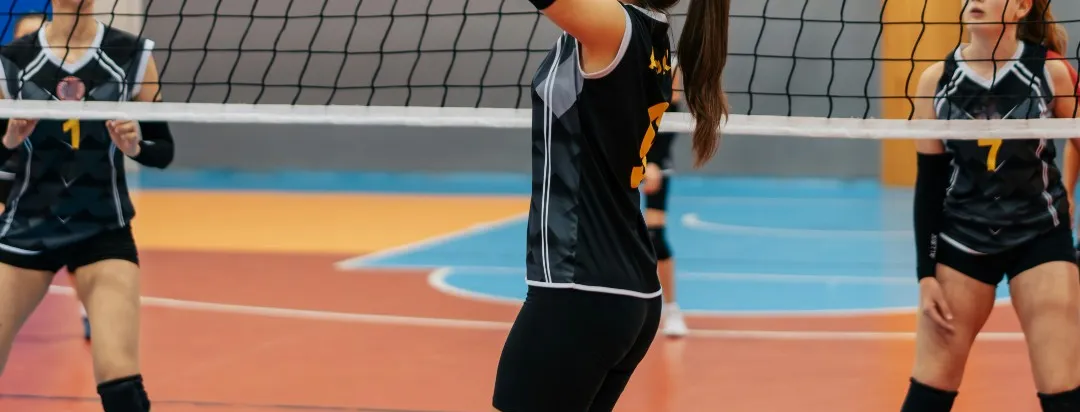
Few calls can swing momentum in volleyball faster than a double contact. Whether you are a new player, a coach, or a curious fan, knowing exactly what triggers the whistle is essential.
This guide explains the rule, why it exists, where it shows up most often, and how athletes at every level can steer clear of the violation.
A double contact occurs when a player contacts the ball twice in succession, or when the ball visibly rolls on one part of the body before touching another, during a single attempt to play it.
The rule applies only to the first team contact after the serve is received. On blocks and on hard-driven attacks, players are given more leeway, but the second team contact and all contacts that follow must be clean.
The double contact rule preserves fairness by preventing one player from controlling the ball twice in a row, which would create an undue advantage.
It forces teams to share touches and encourages quick decision making, keeping the pace fast and rallies entertaining.
Referees look for two separate, distinct touches or prolonged ball control. If the ball spins widely off a set, changes direction sharply between hands, or rests even briefly on the fingers, a violation is likely to be whistled.
Visual cues include uneven hand movement, excessive side spin, or a click-click sound caused by non simultanous hand contact. Officials rely on their angle, not slow motion replay, so a smooth release often keeps the flag down.
Certain game scenarios are notoriously tricky, especially for setters and defensive specialists trying to handle tough balls.
Indoor, beach, high school, collegiate, and international volleyball all share the same core definition, yet how stringently the call is enforced can differ.
FIVB and NCAA officials usually allow slightly more ball rotation on second contacts than high school associations. Beach rules are strict on hand setting, leading many players to bump set to avoid violations altogether.
Footwork matters. Arriving early under the ball lets setters square their shoulders and contact simultaneously with both hands.
For defenders, angle the platform first. If an overhand dig is risky, choose a controlled forearm pass instead. Consistent hand strength training and grip control also cut down on mishits.
A double contact is a straightforward rule, yet its split second nature means even experienced players get caught. Clean, simultaneous contact keeps rallies alive and preserves team rhythm.
By refining technique and recognizing high risk situations, athletes can turn this common fault into a rare occurrence and keep the scoreboard moving in their favor.
Gametime Hero is the AI-powered operating system for active communities.
If you're organizing a community and tired of the chaos, start here
You know your community best — we know how to help it thrive.
You're already doing the hard part: building a community people care about. Gametime Hero gives you events, registration forms, a custom website, payments, scheduling, and communications — so you can stop juggling tools and start scaling.
Whether you run a weekly pickup group or a multi-season league, we'll walk you through exactly how it works for your setup.


Explore our collection of 200+ Premium Webflow Templates