Lorem ipsum dolor sit amet, consectetur adipiscing elit ut liqua purus sit amet luctus venenatis, lectus magna.

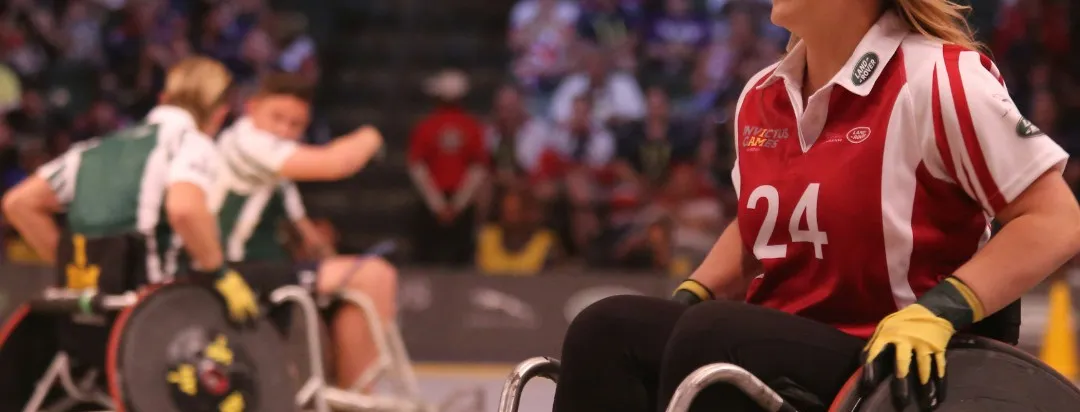
At first glance, dribbling in wheelchair basketball looks familiar: players bounce the ball while advancing toward the hoop. Spend a few possessions watching closely, though, and you will see subtle rule differences that give the sport its own rhythm.
Mastering those differences is crucial for both newcomers and seasoned athletes. This guide breaks down how dribbling is officially defined, what counts as a legal push, and the strategies players use to keep control under pressure.
Under International Wheelchair Basketball Federation rules, a dribble is any action where a player deliberately bounces the ball on the floor, catches it, and continues bouncing. That basic description mirrors stand up basketball, yet the chair introduces an added element: wheel pushes.
Because the chair itself propels the athlete, dribbling regulations focus on how many times a player may push the wheels before bouncing again. This blend of ball handling and chair movement is the backbone of the sport’s tempo.
After gaining control of the ball, a player may push their wheels a maximum of two times without dribbling. Each contact where the hand grips the wheel and propels the chair counts as one push. On the third push the athlete must either:
Failing to comply results in a travel violation, and possession is awarded to the opposing team. Remember that touches used solely to maintain balance or slight adjustments do not count as pushes, provided they do not propel the chair forward.
Travelling is the most frequent infraction. It occurs when a player exceeds the two-push limit without releasing the ball. Unlike stand up basketball, where steps are counted, officials track hand pushes on the wheels.
Double dribble also applies. Once a player ends a dribble by catching the ball and resting it on their lap, starting another dribble is illegal unless another player has touched the ball. Awareness of these nuances keeps turnovers low and offensive sets flowing.
Most athletes dribble with their dominant hand while steering and pushing primarily with the opposite hand. Practicing ambidextrous chair control allows quick transitions between propulsion and ball protection.
Keeping the bounce low, often no higher than the wheel rim, minimizes steal opportunities. Players also use their chair frame and body to shield the ball, angling the chair between the defender and the dribble lane.
Coaches often modify common ball handling drills by inserting chair propulsion checkpoints. Marked lanes or timed audio signals force athletes to think about dribble timing while maneuvering.
Integrating defenders with foam noodles or raised arms simulates real steal threats, teaching players to protect the ball without fouling.
While the objectives remain identical, wheelchair basketball shifts the travel metric from foot steps to wheel pushes. Rebounding and pivoting also rely on chair angles rather than foot placement.
Shot release points may be lower, so dribbling sequences often aim to draw defenders up before a quick pass or pick, maximizing shooting lanes.
Wheelchair basketball dribbling hinges on syncing ball movement with chair propulsion. The two-push rule replaces footwork counts, while traditional violations like travelling and double dribble still apply.
Whether you are learning the game or coaching a new squad, focusing on push counts, low controlled bounces, and smart body positioning will keep possessions alive and elevate overall court performance.
Gametime Hero is the AI-powered operating system for active communities.
If you're organizing a community and tired of the chaos, start here
You know your community best — we know how to help it thrive.
You're already doing the hard part: building a community people care about. Gametime Hero gives you events, registration forms, a custom website, payments, scheduling, and communications — so you can stop juggling tools and start scaling.
Whether you run a weekly pickup group or a multi-season league, we'll walk you through exactly how it works for your setup.


Explore our collection of 200+ Premium Webflow Templates