
How Does Scoring Work in Curling?
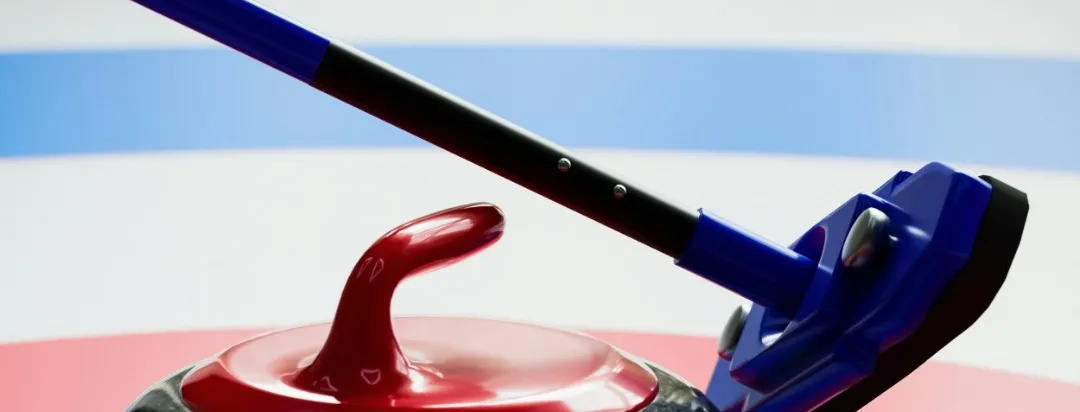
If you have ever watched a curling match and wondered why players sweep furiously before calmly agreeing on a score, you are not alone. Curling is filled with unique terminology, but the math behind the scoreboard is refreshingly simple once you know what to look for.
This guide breaks down exactly how points are awarded, what qualifies as a scoring stone, and how strategy influences the numbers you see at the end of every end.
The Basics: How Points Are Awarded
A standard game of curling is divided into ends, similar to innings in baseball. After the final stone of an end stops moving, officials determine which team’s stone is closest to the center, known as the button.
Only one team can score in an end. That team earns one point for every stone that is closer to the button than the opponent’s nearest stone. This means the maximum score in a single end is eight, though numbers higher than three are rare in elite play.
Understanding the House and Button
The colored rings you see on each side of the sheet are called the house. They measure 12 feet in diameter and contain four concentric circles: 12-foot, 8-foot, 4-foot, and the button at the center.
Only stones that touch any part of the house, even by a hair, are eligible to score. A stone outside the rings is considered out of play for scoring purposes, no matter how close it appears from the stands.
What Counts as a Scoring Stone?
A stone is live for scoring if it ends the end resting on or touching the outer 12-foot ring. Contact can be so slight that officials sometimes rely on a thin measuring stick to confirm eligibility.
If the leading stone of one team sits on the button and the next-closest stone belongs to the same team, that team scores at least two. The counting stops when an opposing stone breaks the sequence.
- Touches any ring of the house
- Remains in play after all stones are delivered
Measuring Close Calls
When stones appear equidistant from the button, officials use a mechanical measure that pivots from the center peg. The device extends an arm to each stone, showing the exact gap.
If a measurement still cannot decide a winner, which is extremely uncommon, the end is declared a blank and no points are awarded.
Blank Ends and Why They Matter
A blank end occurs when neither team scores. While it might seem like wasted effort, teams sometimes try to blank intentionally to retain the hammer, or last-stone advantage, for the following end.
Keeping the hammer allows a team to dictate strategy and often leads to multiple-point ends later in the game.
Hammer Advantage and Strategy
The team that delivers the final stone of an end holds the hammer. Because the last shot can change the scoring picture entirely, having the hammer is generally worth about one point in statistical models.
Teams without hammer focus on forcing the opponent to take a single point or stealing points by finishing an end with the closest stone despite throwing first.
Tiebreakers and Extra Ends
If the score is level after the scheduled number of ends, play continues into an extra end. The hammer is awarded to the team that did not score in the previous end, mirroring normal rotation.
Extra ends follow the same scoring rules. Matches continue until one team records a point, finishing the contest immediately.
Common Scoring Misconceptions
Curling newcomers often assume both teams can score in the same end or that stones outside the rings might count if they are closer overall. In reality, scoring is always limited to one team per end, and only stones touching the house are ever tallied.
Another mix-up is thinking the largest ring carries fewer points than the button; the truth is each qualifying stone counts the same single point, regardless of which ring it touches.
- Only one team scores per end
- Every counted stone equals one point
The Takeaway
Although curling features specialized gear and precise shot-making, its scoring system is rooted in the simple concept of proximity to the button. Once you grasp that only stones in the house can count and that points go to whichever team’s stones are closer, the strategy playing out on the ice becomes far clearer.
Whether you are tuning in for the Winter Games or planning to slide a few stones yourself, understanding how the numbers add up will deepen your appreciation for this uniquely strategic sport.
Gametime Hero is the AI-powered operating system for active communities.
If you're organizing a community and tired of the chaos, start here

