
What Happens When Two Swimmers Finish at the Same Time?
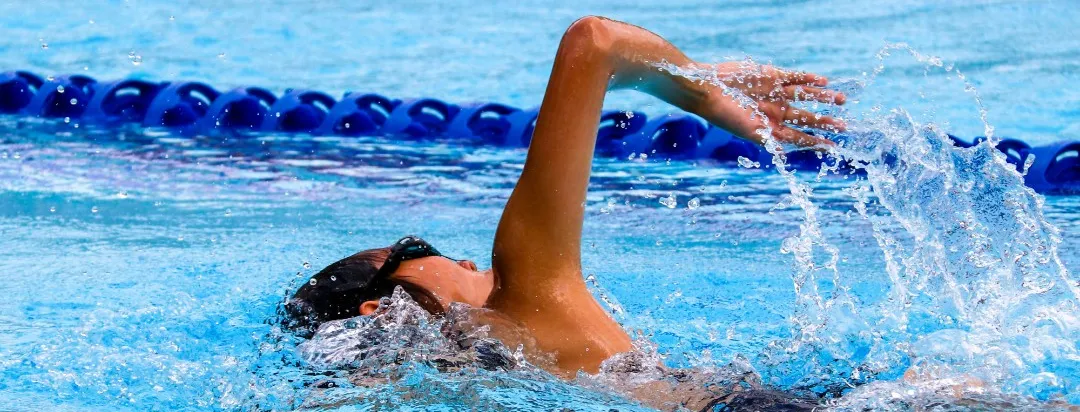
Swimming relies on precision timing. Races are often settled by mere hundredths of a second, and every fingertip stretch counts. But what if two athletes seem to touch the wall at precisely the same moment?
This scenario, sometimes called a dead-heat, is uncommon yet fully covered by governing rules. Here is a look at how finish times are recorded, verified, and, when necessary, how medals are awarded when the clock shows no separation.
How Electronic Touch Pads Capture the Finish
Modern pools used for high-level meets feature pressure-sensitive touch pads embedded in the end walls. When a swimmer applies at least a set force, usually around 1.5 to 2.5 kilograms, the pad closes an electrical circuit that stops the lane's timer.
Each lane is wired independently, so the timing console instantly records a finish time to the hundredth or thousandth of a second, depending on meet regulations. Because all lanes are measured against the same internal clock, swimmers cannot gain or lose time due to pad placement differences.
Understanding the Margin of Error
Despite the accuracy of electronic systems, a small tolerance still exists. Governing bodies such as World Aquatics recognize that touch pad sensitivity, water turbulence, and hand force can create slight variations.
Most international competitions list the official resolution as 0.01 seconds. If the system records an identical time to that precision, the competitors are considered tied unless further review reveals a clear lead.
Why Thousandths of a Second Are Not Official
Many timing systems are capable of measuring to the thousandth of a second, but governing bodies deliberately round to the hundredth for official results.
The extra digit can create false certainty because small variations in touch pad sensitivity or water turbulence can exceed one thousandth of a second.
By limiting precision to 0.01, officials reduce the risk of deciding races on unreliable data and maintain consistent standards across venues.
When Officials Resort to Video Review
Photo-finish cameras positioned above and beside the pool provide additional evidence. Officials can slow footage frame by frame to see whether one swimmer touched first in real time even if the timing system did not register a difference.
If visual review shows separation that is not reflected in the electronic result, the jury of appeal can amend the official order of finish. When both the clock and the video remain inconclusive, the tie stands.
Tie-Breaking Rules Across Competition Levels
Rulebooks outline what happens after a confirmed tie. Procedures vary slightly depending on the stage of the event.
In most cases, medals or advancement spots are simply shared, but some meets require additional swims.
- Heats and semifinals: A swim-off is held later in the session to decide lane assignments or advancement.
- Finals: Swimmers share the podium position and both receive the corresponding medal.
- Relay events: Team ties are treated the same as individual ties with medals duplicated.
Memorable Dead-Heats in Swimming History
Ties at major championships are rare but not unheard of. The 2016 Olympics produced one of the most talked-about examples when Simone Manuel and Penny Oleksiak shared gold in the women's 100-meter freestyle, both clocking 52.70 seconds.
Another noteworthy finish occurred at the 2003 World Championships, where Jenny Thompson and Jodie Henry tied for bronze in the 100-meter freestyle. These moments highlight both the sport's competitive depth and the precision required to separate elite performances.
Conclusion
Electronic touch pads, high-speed cameras, and detailed rulebooks ensure that swimming can handle even the closest of finishes with fairness. When the technology and human review agree that no separation exists, athletes share the honor.
While a dead-heat can surprise spectators, it underscores the sport's razor-thin margins and the importance of every stroke, kick, and fingertip at the wall.
Gametime Hero is the AI-powered operating system for active communities.
If you're organizing a community and tired of the chaos, start here

