Lorem ipsum dolor sit amet, consectetur adipiscing elit ut liqua purus sit amet luctus venenatis, lectus magna.

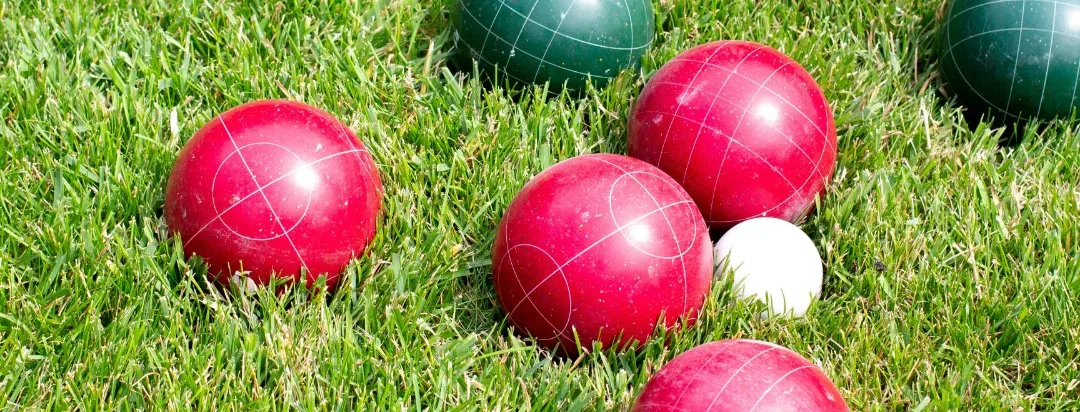
If you have ever seen athletes rolling leather balls toward a white target and assumed it was bocce, you are not alone. The scene could just as easily have been a game of boccia, a Paralympic sport that looks similar at first glance but follows a very different rulebook.
Understanding the distinctions between boccia and bocce matters for players, fans, and anyone looking to host or stream the right kind of match. This guide breaks down how the two sports diverge in history, playing space, gear, scoring, and competitive structure.
Both sports trace their lineage to ancient Roman ball-rolling games, yet they evolved on different paths. Bocce flourished in Italian communities worldwide as a casual lawn or beach pastime. Boccia, on the other hand, emerged in the 1980s as an adapted form of lawn bowls to give athletes with severe physical impairments a precision sport of their own.
Today bocce is governed internationally by the Confederazione Boccistica Internazionale, while boccia falls under World Boccia and has featured in every Summer Paralympic Games since 1984.
Bocce courts are typically 76 feet long and 10–13 feet wide, with raised wooden boards enclosing a smooth, compacted oyster-shell or synthetic surface. Recreational players often adapt the size to fit backyards or public parks.
Boccia courts are smaller, measuring 40 by 20 feet, and use an indoor, polished hardwood or synthetic gym floor that allows balls to glide predictably. The smaller space accommodates wheelchair movement and ensures consistent roll speed.
The balls are where spectators most quickly spot a difference. Bocce uses hard resin balls roughly the size of a grapefruit. Each team receives four colored balls plus one smaller pallino that serves as the target.
Boccia balls are handmade out of soft leather and filled with plastic pellets, allowing athletes to grip, throw, or propel them with assistive devices. A separate white jack ball acts as the target.
In bocce, players toss or roll their balls trying to end up closest to the pallino. Frames continue until a team reaches a preset score, often 12 or 15 points. Players may bank shots off sideboards or knock opponents away from scoring position.
Boccia follows a set number of ends: four in individual play, six in pairs and team events. Athletes alternate propelling balls, aiming to finish each end with more balls closer to the jack than their opponents. The soft leather allows for lob, push, and chip-shot techniques not possible in bocce.
Bocce welcomes players of nearly any age and physical ability and is often seen in community centers, parks, and social clubs. While adaptive bocce programs exist, the standard game assumes full mobility for measuring and delivering balls.
Boccia is specifically engineered for athletes with severe cerebral palsy, muscular dystrophy, or similar impairments that limit limb movement. Competitors may use ramps, head pointers, or other assistive gear, and trained sport assistants can help position equipment without influencing strategy.
Local bocce leagues feed into national championships in countries like Italy, the United States, and Australia, but the sport retains a strong recreational identity. Prize money is modest, and televised coverage is rare outside major Italian events.
Boccia enjoys a robust international schedule thanks to its Paralympic status. Athletes earn world ranking points at regional opens, continental championships, and biennial world championships, culminating in the Paralympic Games where global viewership peaks.
While boccia and bocce share an ancient heritage and the simple goal of rolling balls toward a smaller target, they part ways in almost every practical detail. Bocce thrives as a social lawn sport with minimal equipment barriers, whereas boccia delivers elite, highly specialized competition for athletes with significant physical impairments.
Knowing which sport suits your venue, players, or viewing interests will ensure you set up the correct court, purchase the right balls, and follow the proper rulebook.
Gametime Hero is the AI-powered operating system for active communities.
If you're organizing a community and tired of the chaos, start here
You know your community best — we know how to help it thrive.
You're already doing the hard part: building a community people care about. Gametime Hero gives you events, registration forms, a custom website, payments, scheduling, and communications — so you can stop juggling tools and start scaling.
Whether you run a weekly pickup group or a multi-season league, we'll walk you through exactly how it works for your setup.


Explore our collection of 200+ Premium Webflow Templates